
Blake Austin College · Vacaville, CA
Explore Our Healthcare Programs
Five accredited paths into clinical work — 10 to 19 months, on-campus training, real patient-care hours before you graduate.
Request Information - Hero
- Accredited institution
- 10–19 month program lengths
- On-campus clinical rotations
- Founded 1996
Our Programs
Five ways into a healthcare career
Every program combines classroom instruction with hands-on lab time and a supervised clinical rotation. Choose the track that matches the role you want.
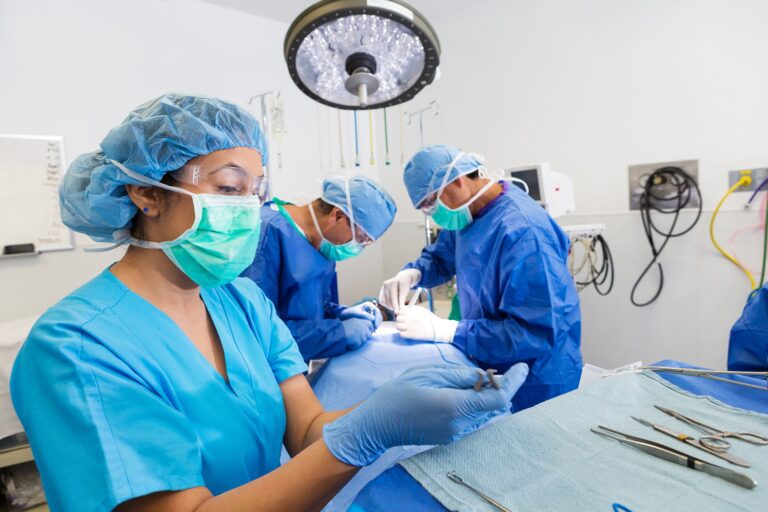

Surgical Technician – Hybrid
Sterile technique, instrumentation, and case preparation, trained in a mock operating room.
View Program DetailsAdmissions, curriculum & outcomes
Admissions: Bring a high school diploma or GED and a government-issued ID to your first visit. You’ll complete an application, tour the campus, and meet with Financial Aid.
Curriculum: About 19 months, hybrid, leading to an Associate of Applied Science. Coursework covers anatomy and physiology, perioperative practice (pre-, intra- and postoperative care), sterile technique, infection control, instrumentation, and an introduction to surgical pharmacology and anesthesia. Includes 420 hours of supervised externship across two clinical placements.
Outcomes: Prepares graduates for entry-level roles in hospital operating rooms, ambulatory surgery centers, and public and private surgical centers.
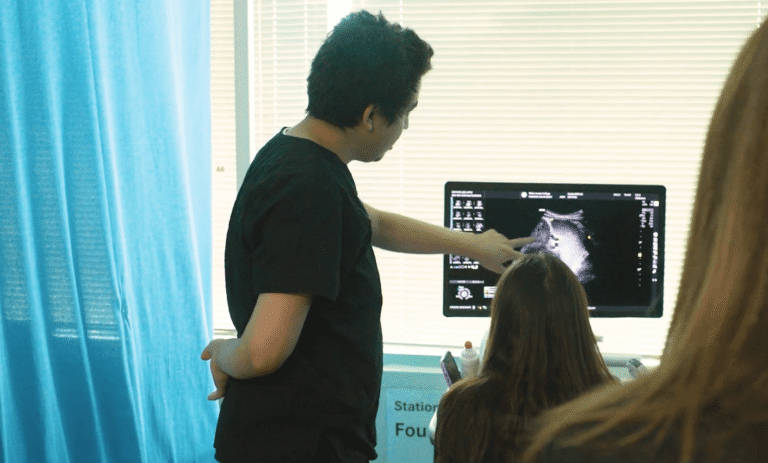

Diagnostic Medical Sonography – Hybrid
Abdominal, OB/GYN, and vascular scanning technique, built around a dedicated sonography suite.
View Program DetailsAdmissions, curriculum & outcomes
Admissions: Bring a high school diploma or GED and a government-issued ID to your first visit. You’ll complete an application, tour the campus, and meet with Financial Aid.
Curriculum: 17 months, hybrid, leading to an Associate of Applied Science. Covers ultrasound procedures and imaging specialties, anatomy, physiology, medical terminology, patient care, and ultrasound technology. Includes hands-on labs and supervised clinical rotations at healthcare facilities.
Outcomes: Prepares graduates for entry-level sonography roles in hospitals, diagnostic imaging centers, clinics, medical offices, and outpatient facilities.
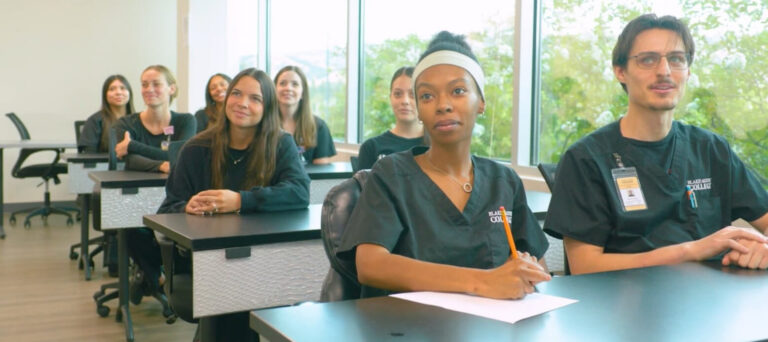

Continuing Education
Short-format courses and recertifications for working professionals — CPR, phlebotomy refreshers, and more.
View Program DetailsAdmissions, curriculum & outcomes
Admissions: Call 707.455.0557 for schedules and enrollment.
Curriculum: Courses for nursing professionals and graduates who need mandatory or voluntary continuing education and certification. More courses are coming soon.
Outcomes: Helps working professionals stay current with their certifications and requirements.
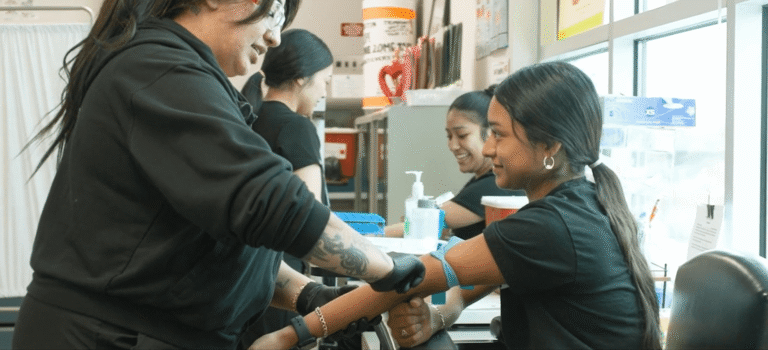

Clinical Medical Assistant with Phlebotomy
Patient intake, EKG, and venipuncture technique across three in-house clinical labs before a supervised externship.
View Program DetailsAdmissions, curriculum & outcomes
Admissions: Bring a high school diploma or GED and a government-issued ID to your first visit. You’ll complete an application, tour the campus, and meet with Financial Aid.
Curriculum: 920 hours (38 semester credits). Covers vital signs, patient prep, venipuncture, injections, EKG, and infection control, with training on equipment such as centrifuges, autoclaves, microscopes, and EHR software. Includes AHA CPR certification and more than 200 externship hours split between phlebotomy and medical assisting.
Outcomes: Graduates are eligible to apply for California CPT1 phlebotomy licensure and to sit for the national RMA exam (AMT). Application and testing fees aren’t included in tuition.
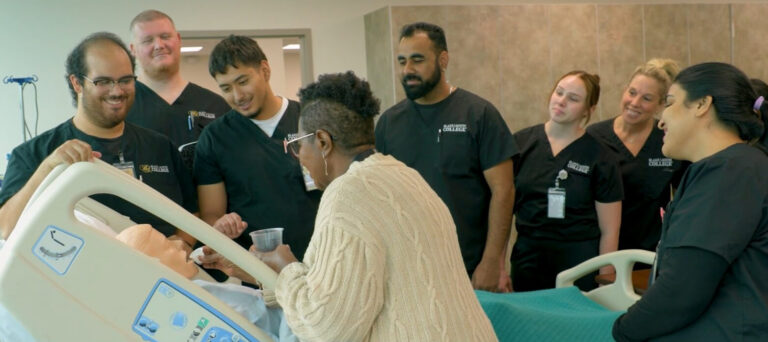

Vocational Nursing Program
Full-scope patient care training with rotations across medical-surgical, pediatric, and long-term care settings.
View Program DetailsAdmissions, curriculum & outcomes
Admissions: Applicants must provide a high school diploma or GED, meet HESI entrance exam requirements, complete a program interview, and satisfy required health screenings, immunizations, background checks, and drug screening.
Curriculum: Approximately 12 months (48 weeks), totaling 1,620 clock hours and 64 semester credits. Coursework covers nursing fundamentals, medical-surgical nursing, patient care, nursing specialties, and leadership. Includes hands-on laboratory instruction and supervised clinical training.
Outcomes: Prepares graduates to apply to take the NCLEX-PN licensing exam to become a Licensed Vocational Nurse (LVN) in California. Graduates who obtain licensure may pursue entry-level nursing opportunities in hospitals, medical clinics, long-term care facilities, and home healthcare settings.
FAQ
Common questions
How long are Blake Austin College’s medical programs?
Program lengths at Blake Austin College vary depending on your chosen healthcare career path. Some diploma programs can be completed in approximately 9–12 months, while associate degree programs and specialized healthcare training may take 17–24 months or longer. Programs include Medical Assisting, Vocational Nursing, Diagnostic Medical Sonography, Surgical Technician, and other healthcare career pathways.
Contact our Admissions team to learn more about program schedules, requirements, and estimated completion times.
Are the programs on-campus, online, or hybrid?
Blake Austin College offers a combination of on-campus and hybrid learning options, depending on the program. Some programs combine online coursework with in-person laboratory training, while others require regular campus attendance for hands-on instruction.
Healthcare programs may also include clinical rotations or externships, allowing students to apply their knowledge in real-world healthcare settings. Contact Admissions to explore the learning format that best fits your schedule and career goals.
Is financial aid available?
Yes. Financial aid is available to those who qualify. Blake Austin College offers assistance to help eligible students explore federal financial aid programs and other available funding options.
Our Financial Aid team can guide you through the application process, explain eligibility requirements, and help you understand your options for financing your education.
Visit our Affordability page to learn more.
What are the admission requirements?
Admission requirements vary by program at Blake Austin College. Generally, applicants must meet the college’s educational eligibility requirements, which may include providing a high school diploma or recognized equivalent.
Certain healthcare programs may have additional requirements, such as prerequisite coursework, entrance assessments, background checks, immunizations, or health screenings before participating in clinical training.
Our Admissions team can walk you through the requirements for your chosen program and help you understand the enrollment process.
Visit our Admissions page to get started.
Do you help with job placement after graduation?
Blake Austin College provides career services to help students and graduates prepare for employment opportunities in healthcare. Support may include résumé development, interview preparation, job search guidance, and assistance connecting with potential employers.
Hands-on training, clinical experiences, and externships in applicable programs help students develop practical skills for the workplace.
While employment cannot be guaranteed, Blake Austin College is committed to helping graduates prepare for the next step in their healthcare careers.
Learn more about Student Services.
Campus
The Vacaville campus
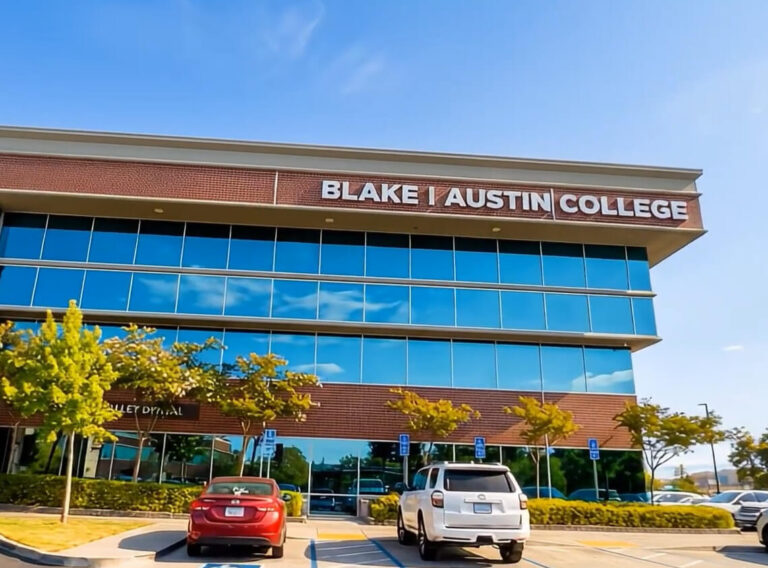
Campus
Nursing Lab
Classroom
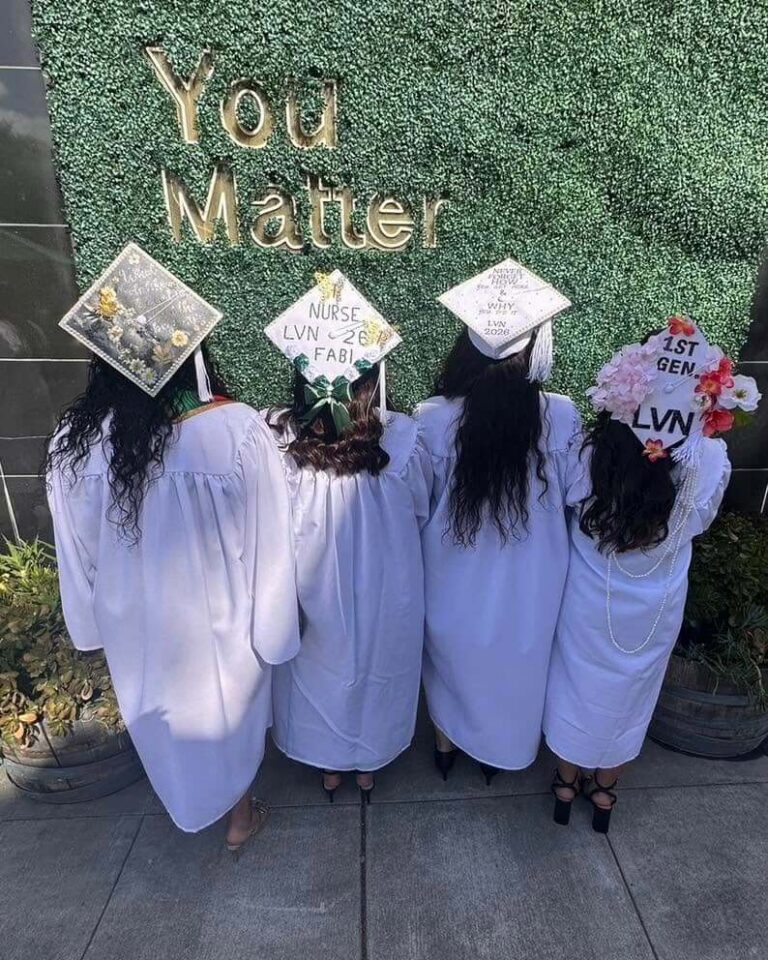
Graduation